We have some exciting news: the Mynah will ship with a curated selection of sample packs from Goldbaby, and we’re super excited about it!
In case you haven’t come across Goldbaby before, they’re a New Zealand-based sample library maker with a serious reputation in the music production world. Hugo at Goldbaby has been crafting meticulously recorded, hardware-sourced sample content for years, and the quality of work has earned them collaborations with Native Instruments, Elektron, Ableton, and Dave Smith Instruments, among others.
What makes Goldbaby such a natural fit for the Mynah is the aesthetic overlap. Their packs lean into the character of real hardware (tape warmth, vintage drum machines, analogue texture) which sits perfectly alongside the Mynah’s lo-fi sensibility.
Every Mynah kit will come with an SD card loaded with half of Goldbaby’s free pack catalogue, so you’ll have a solid library of quality sounds ready to go the moment you power up. No hunting around for decent samples to get started.
A big thank you to Hugo at Goldbaby for being so generous!
Please check out the full catalogue at goldbaby.co.nz – there’s plenty more where this came from.
I’m nearing a version of the firmware that I wouldn’t be embarrassed to ship with the first kits. Luckily, easy over-the-web firmware updates means things are not set in stone, and I plan to be very responsive to bug reports and feature suggestions from the user community.
With the per-voice features now just about done, I made a video to walk through the current capabilities.
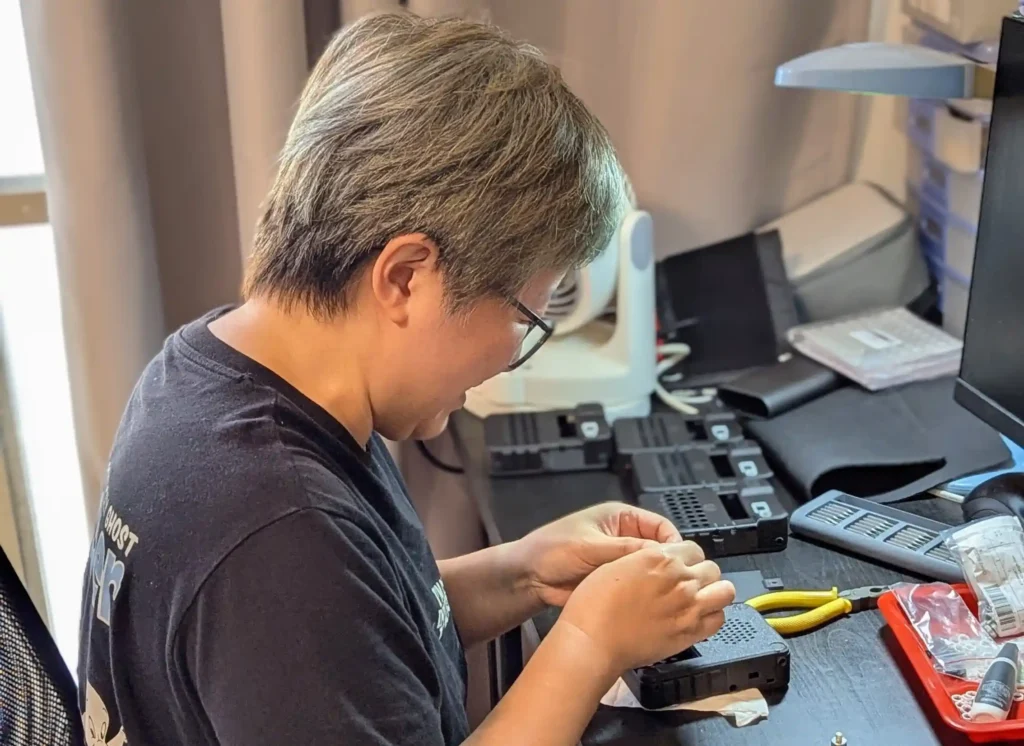
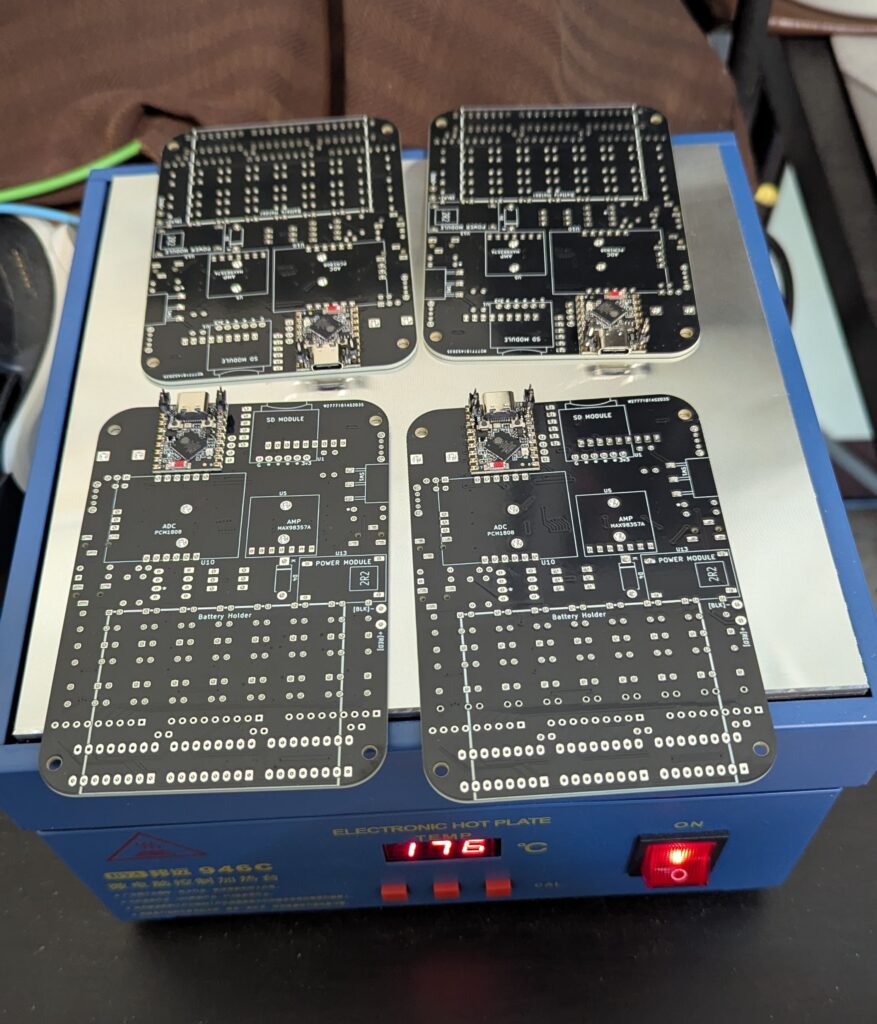
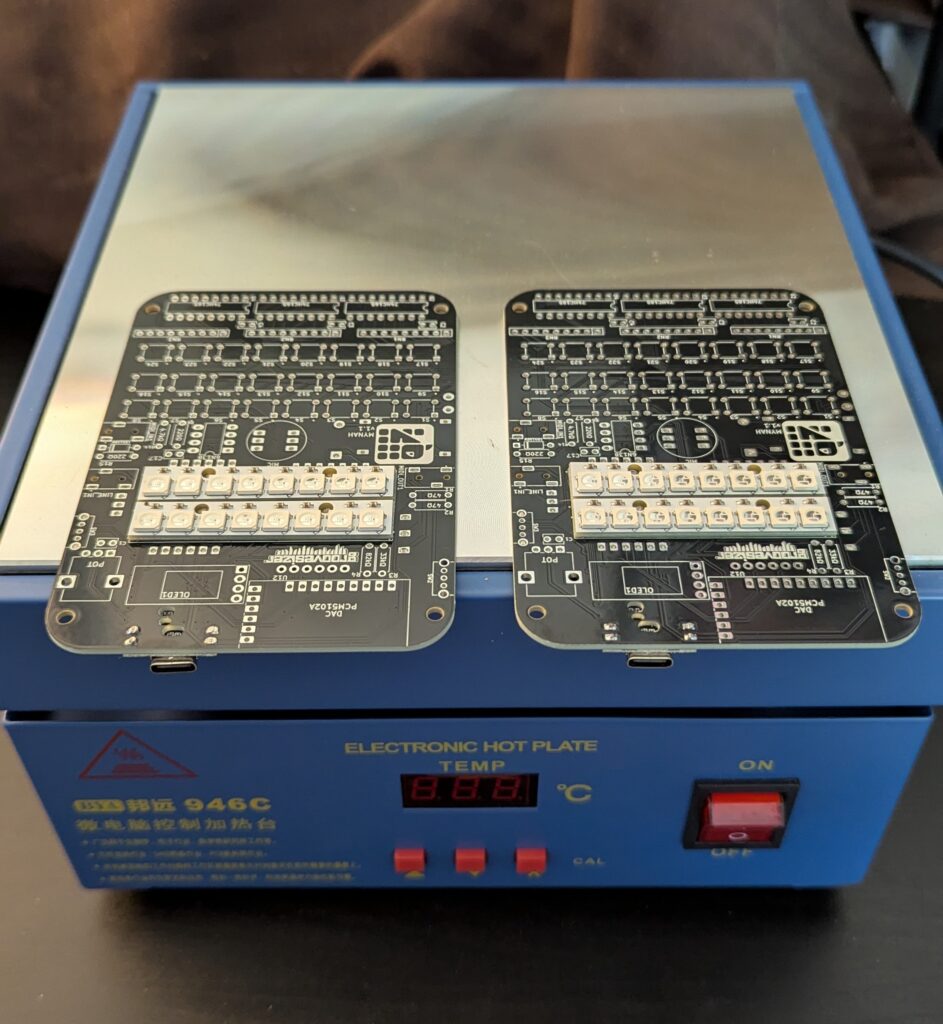
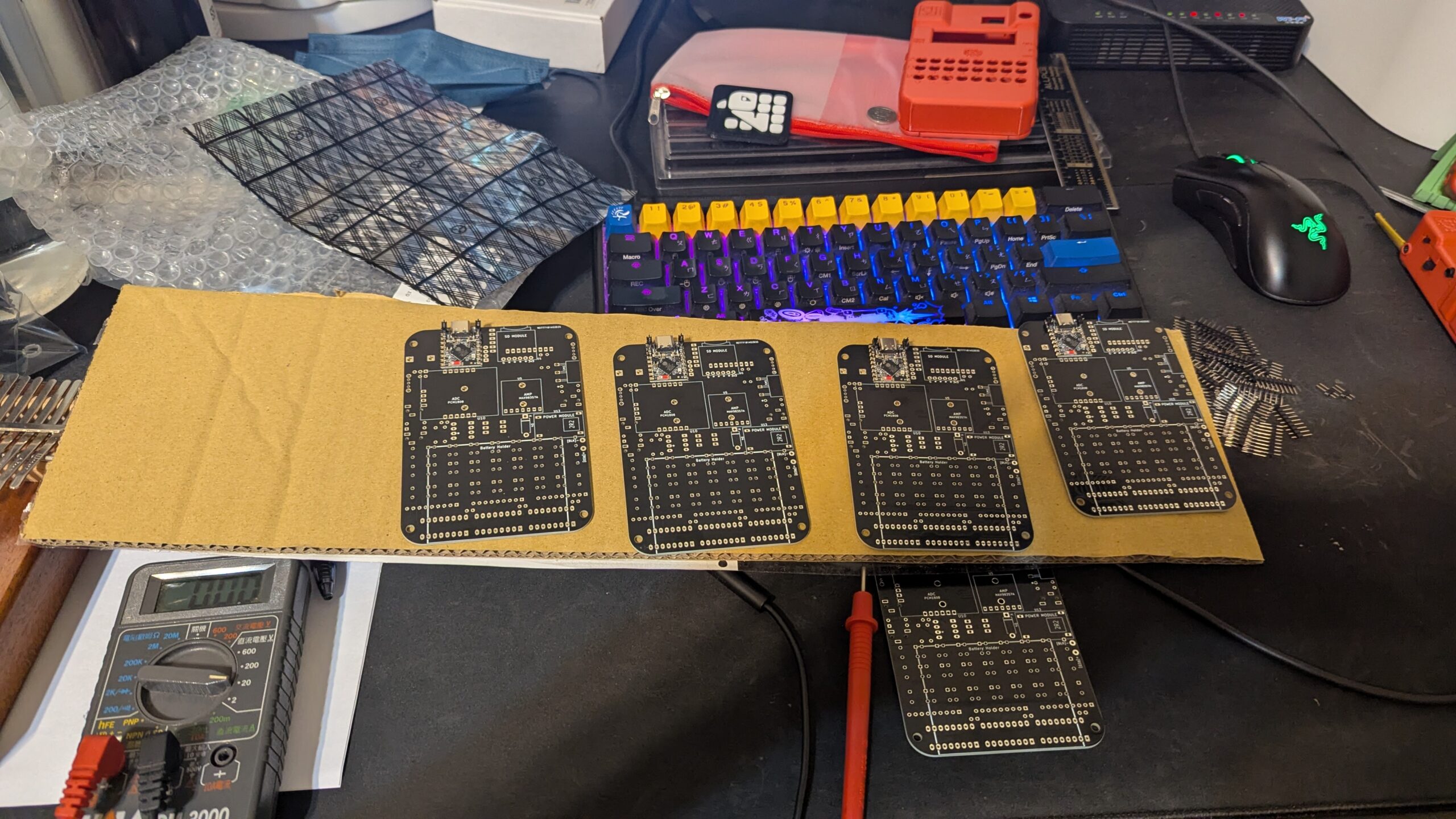
With most of the parts now in our hands, we’ve started packing kits and doing the SMD soldering of the ESP32 microcontrollers.
Fifty ESP32s soldered, fifty tested and working A-OK! Next, the neopixel sticks on the other side of the PCB.
In addition to applying final touches to the V1 firmware, we’re making things official by registering a business entity here in Taiwan dedicated to all things Groovesizer. The official company name needs to be in Chinese and we’re happy to report that we’ll be operating as MoShang Music Technology locally, and Groovesizer abroad.
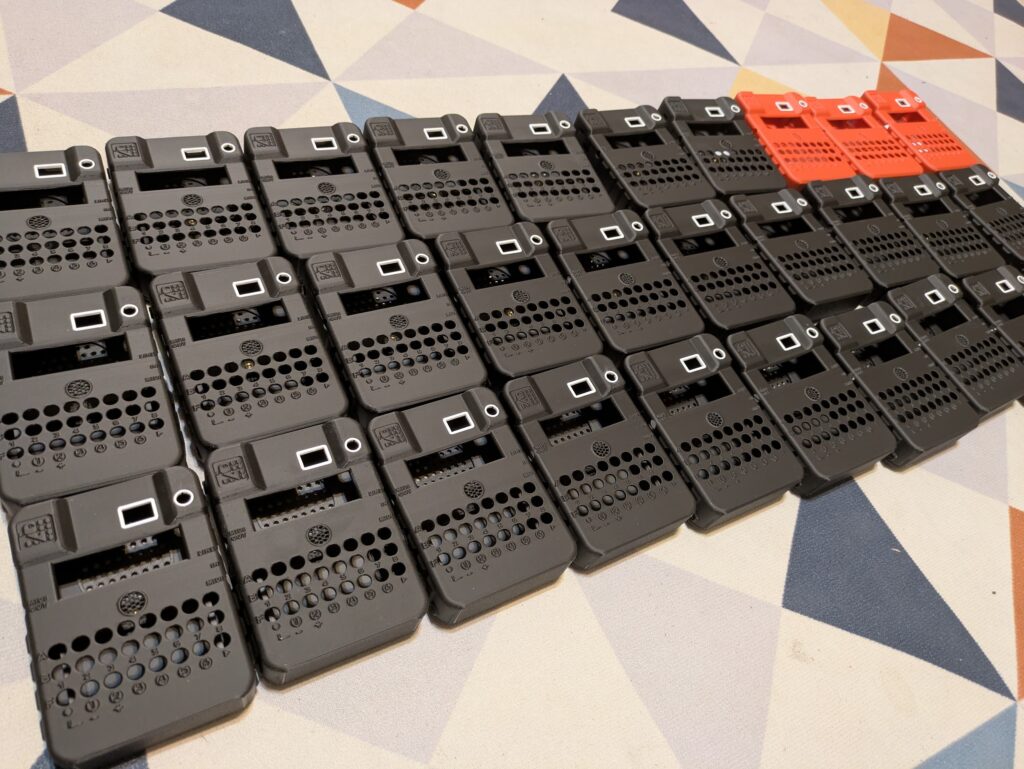
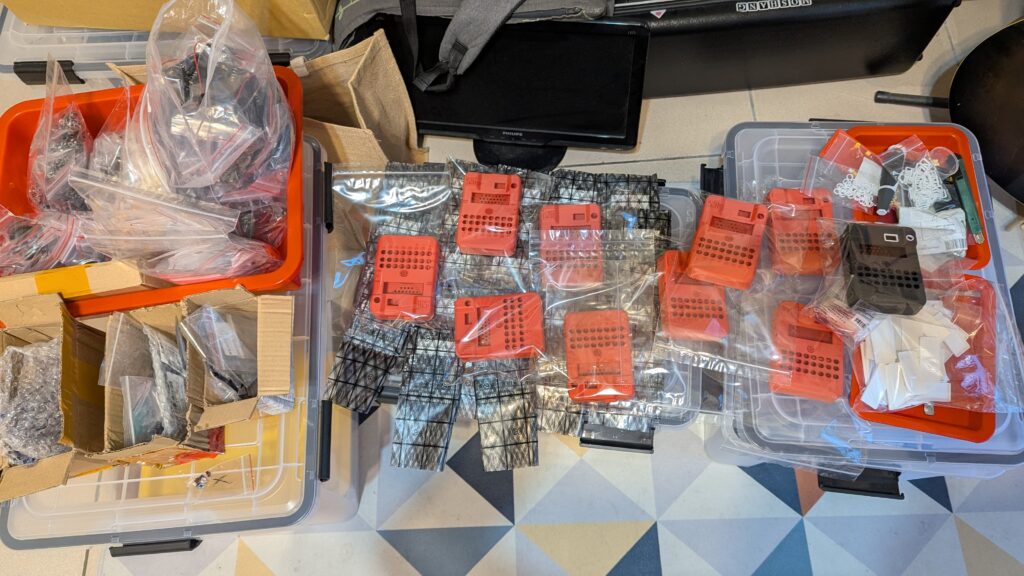
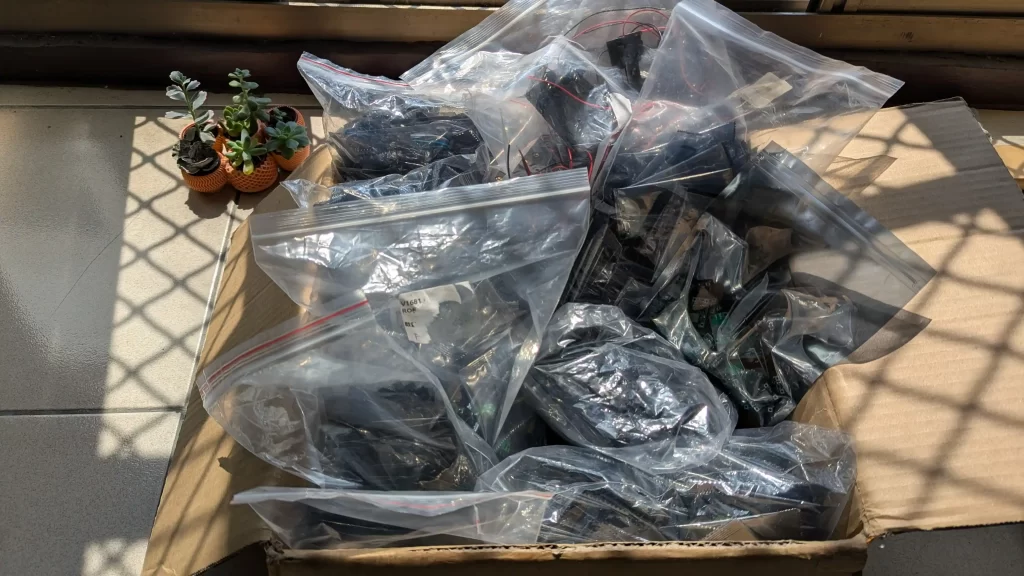
Parts for the first 50 kits are continuing to arrive and we are hard at work packing kits. To allow for a few more stragglers, we’ve adjusted out expected launch date to May 1st.
Microcontrollers, battery holders, audio modules and more!
In the meantime we’ve added complete build instructions. Head on over to https://groovesizer.com/build-it-mynah/ to see if you’re up for the challenge of soldering your own Mynah.
It’s been a long haul (I guess around 18 months?), but LyraVR is finally available on Steam Early Access. Here’s the full press release:
LyraVR Beta Enables Artists to Pioneer VR Music
Steam Early Access Release Key features
New Instruments
Spatial Audio with detachable “VR ears”
Audio Effects
Audio Import/Export
Group Note editing actions for selected nodes (copy, delete, parameter adjustment)
TAIPEI, Taiwan – LyraVR’s radical reimagining of how we create, perform and share music is now available to anyone with an interest in music, virtual reality (VR) or cutting-edge artistic expression – and an HTC Vive.
The March 22 Steam Early Access release of LyraVR, winner of the 2015 Leap Motion 3D Jam, is now available from the LyraVR Steam page for US$9.99. This HTC Vive port adds a medley of new features, including a nine-pad drum controller, an 88-key keyboard, an audio effects library and the ability to import and display audio via an innovative system for rendering audio waveforms in virtual reality.
Users will appreciate the addition of Group Node editing actions that offer greater organizational control over their work, the option to customize the tempo and speed of each musical note, not to mention a suite of loops provided by Loopmasters. The release also features spatial audio with detachable VR “ears” that users can drag around their composition to alter the audio perspective, or keep fixed for a more controlled listening experience. Expect further releases of extra downloadable content as LyraVR grows and evolves as a platform.
Built from the ground up for VR, LyraVR is a music creation platform that offers everyone from the casual user to the most ardent musician the chance to create and enjoy incredible music sequences in full room-scale VR. Users can add unprecedented sculptural elements to their composition by hand-placing musical notes in VR and activating them via HTC Vive controllers that act as drumstick-like mallets. What’s more, they can share their original creations with collaborators, friends and fans, in the process helping to shape and advance a completely new arena of musical expression.
Other features new to this release include:
An autoplayer which provides an intuitive way to play musically related chords, arpeggios and phrases
Node based audio special effects (low-pass filter, tempo delay)
An innovative system for adjusting audio effects parameters in virtual reality
Redesigned in-world menu systems and environments, and an overhauled tools selection on the Vive wand (“Flower menu”), and hilt menu functionality
“We see this as being like the VR version of GarageBand,” said LyraVR Co-Founder and CEO Dilun Ho. “Anyone who is into music and or VR should give this a go. The only way is to put on a headset and experience it.”
“This is a chance to totally rethink the way we make music. Early adopters will be joining us on the adventure,” said LyraVR designer and 3D artist Ian Stead.
“More than 25 years worth of experience—first with PC-based, MIDI-only sequencers, and then DAW software and soft synths as those became available—led to Lyra VR,” said programming and audio lead Jean Marais, who has a history of creating sequencers and synths for the Arduino platform.
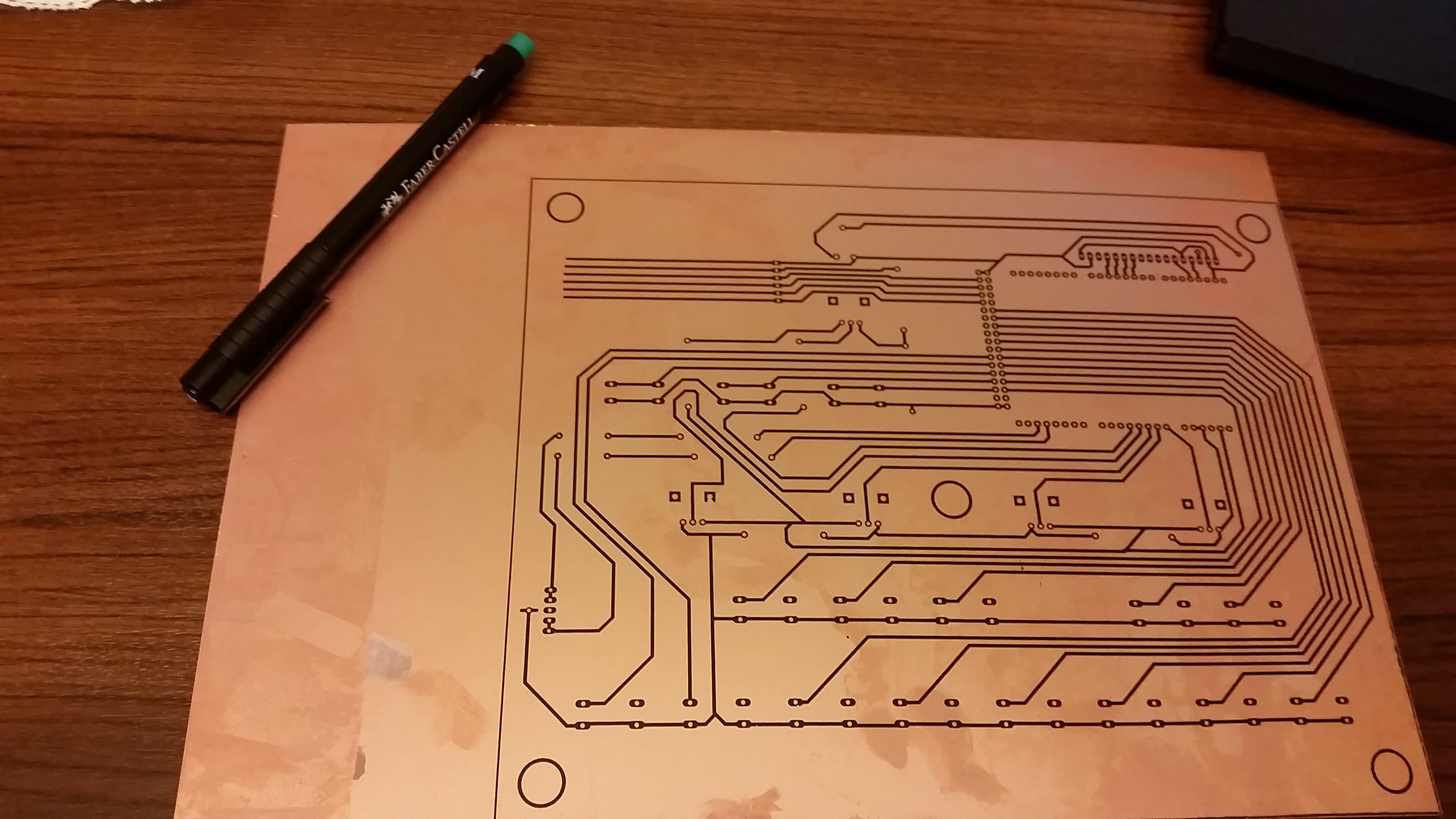
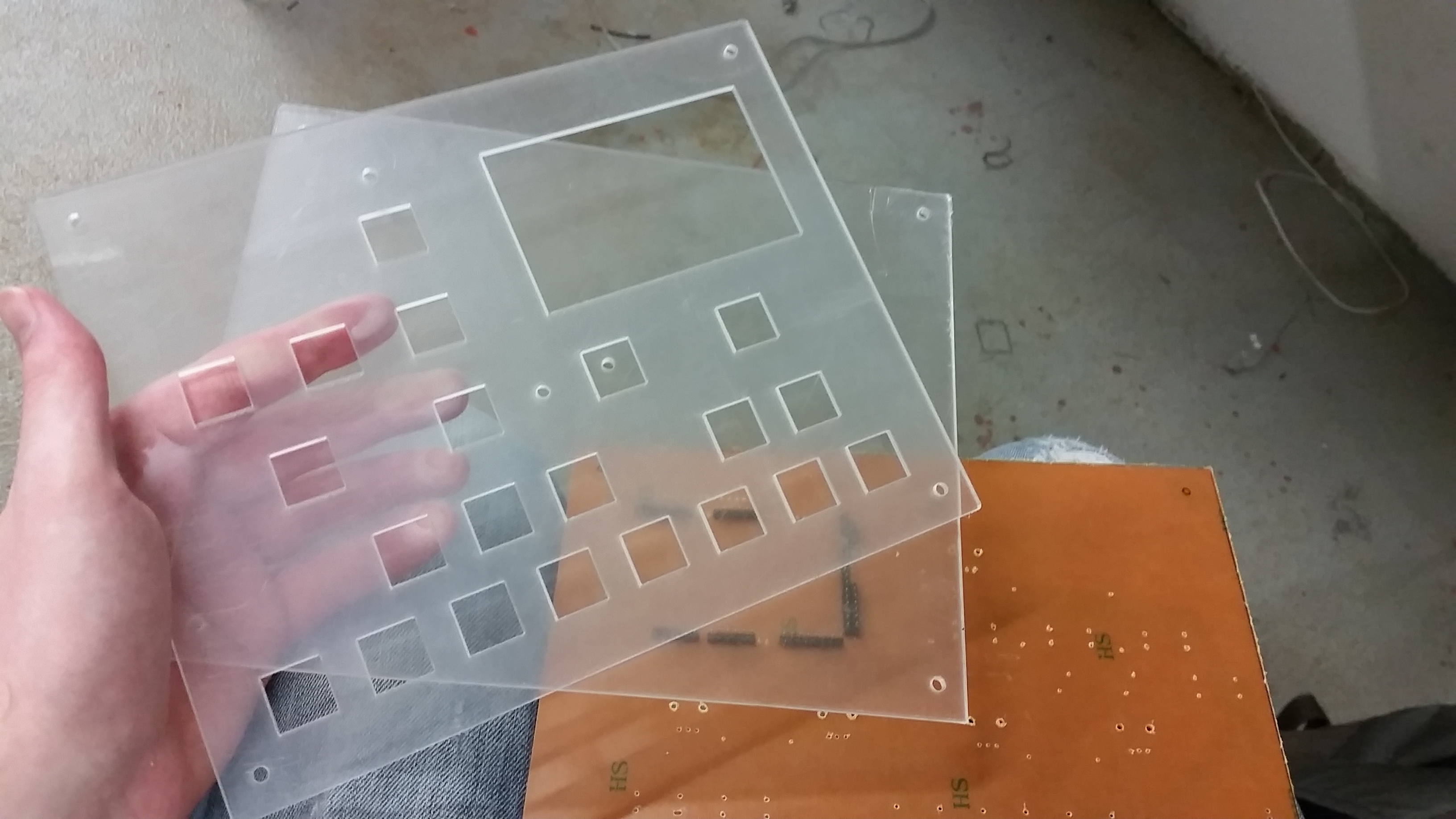
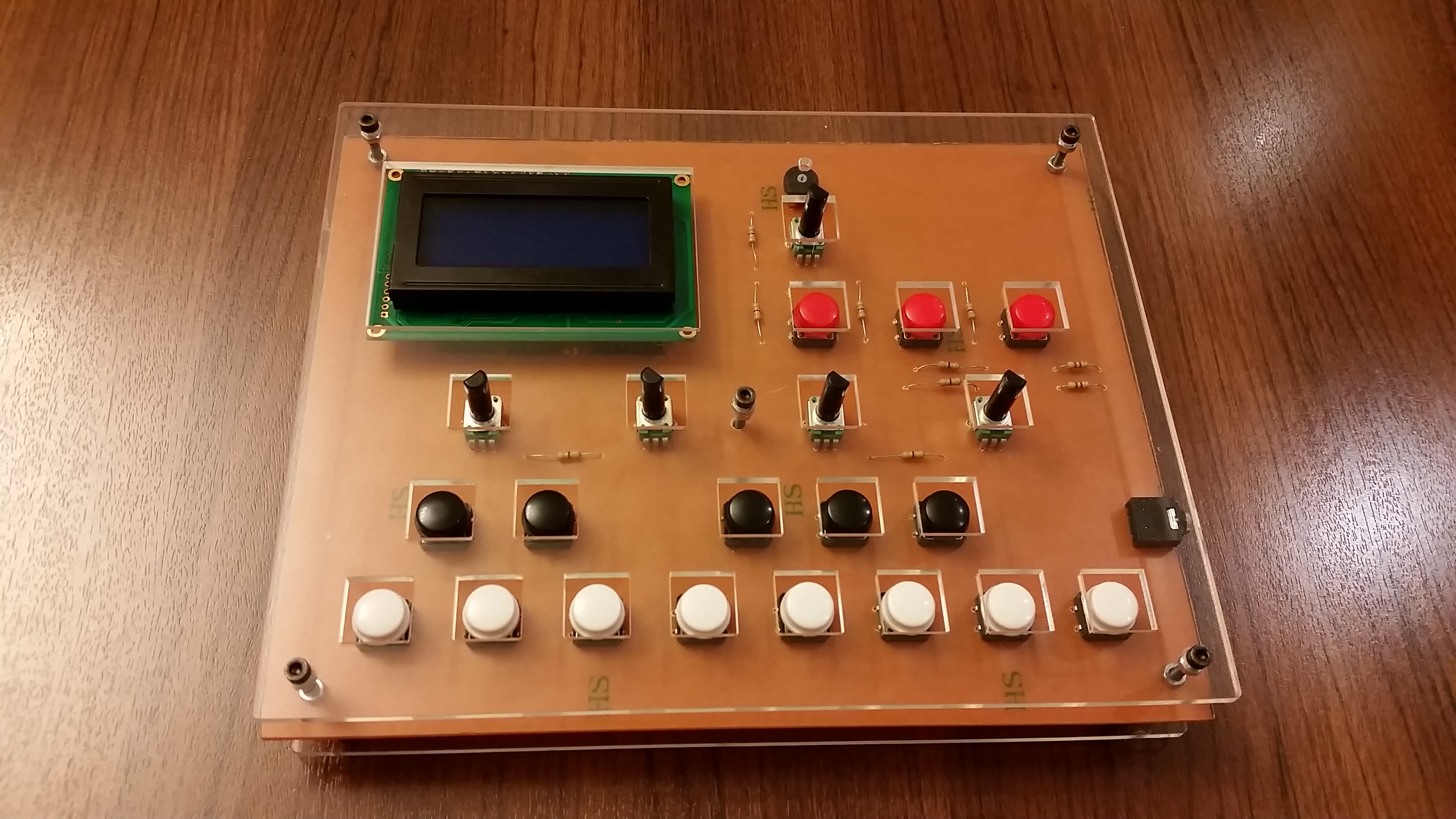
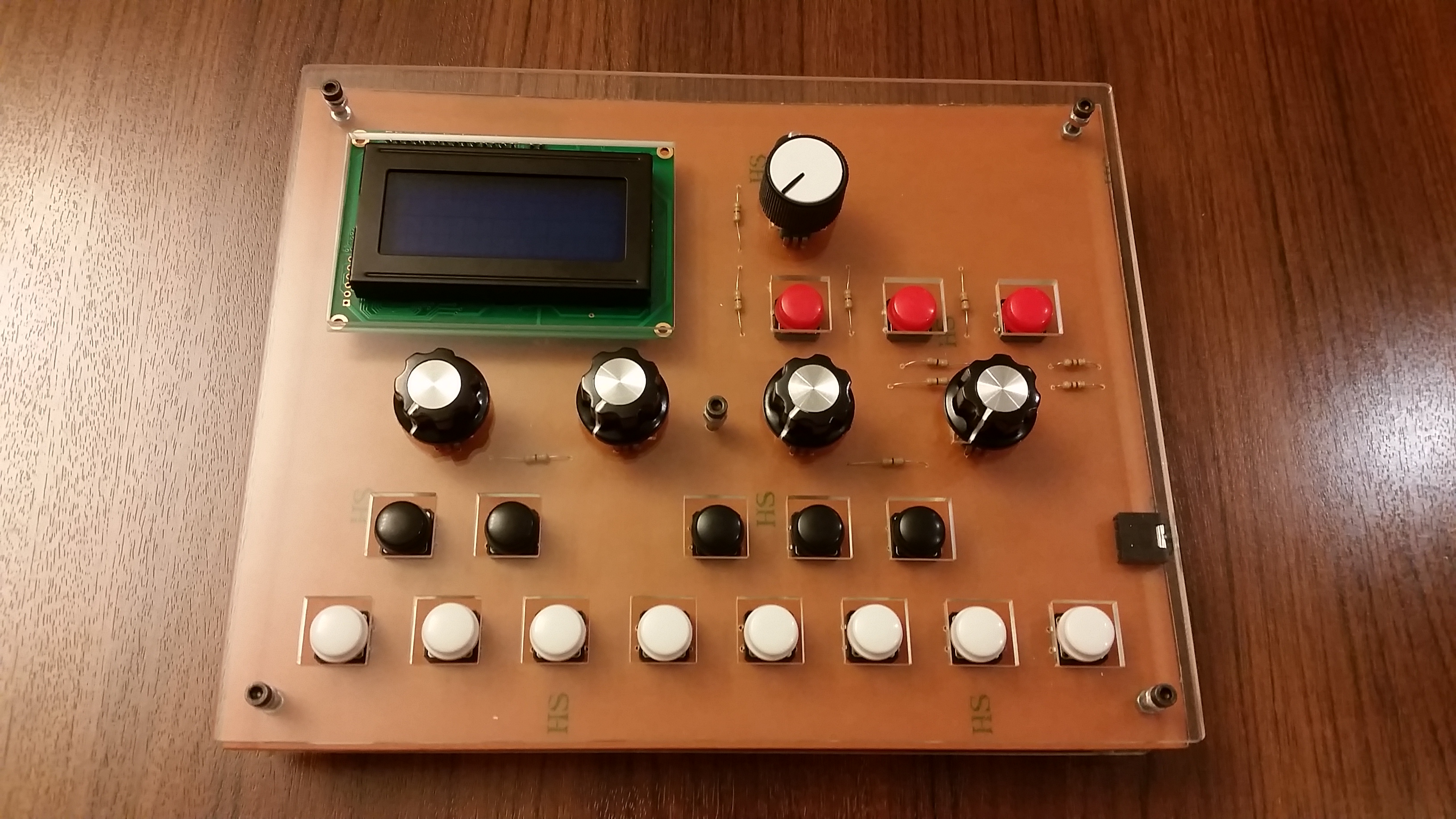
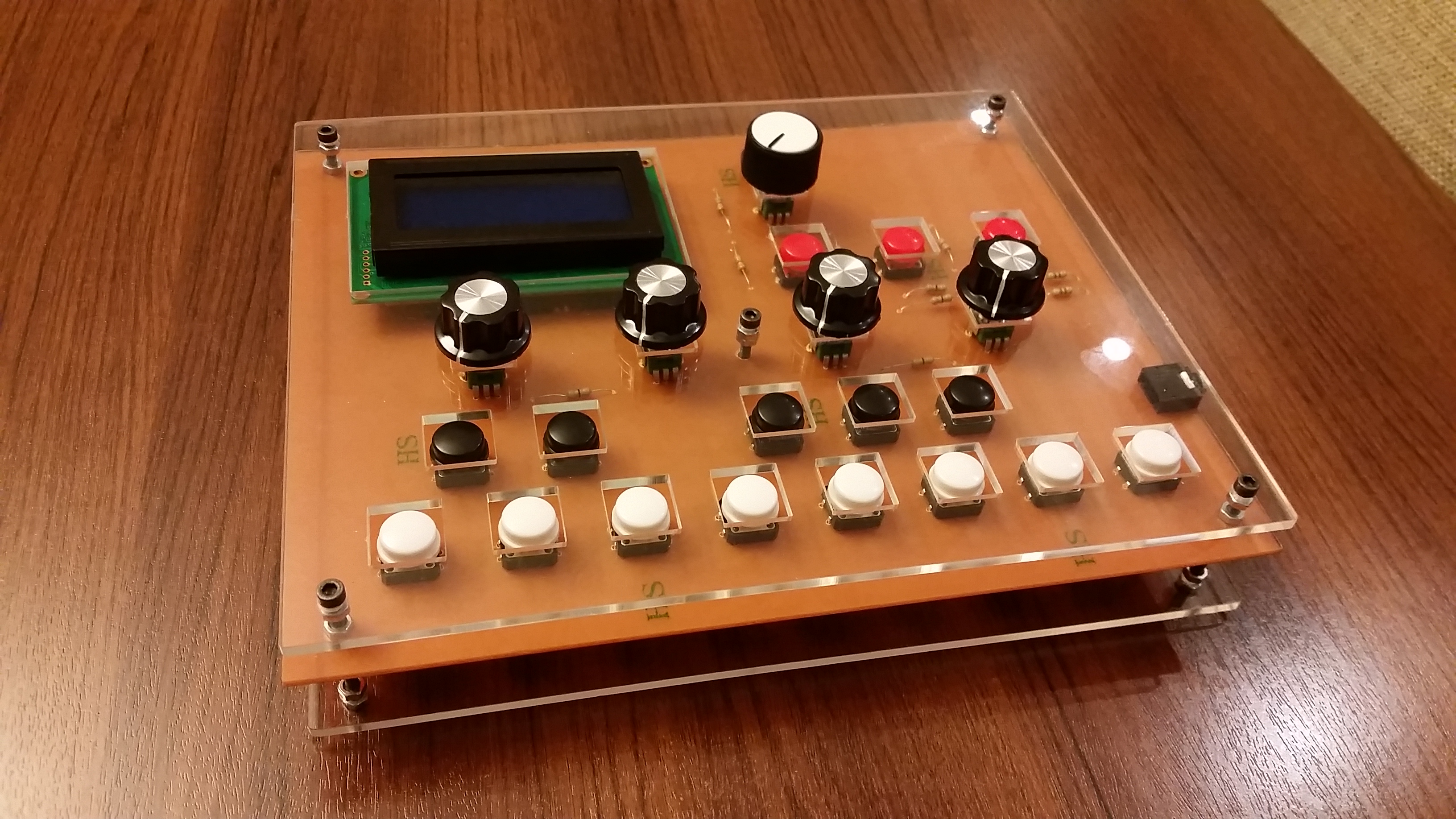
A grad student in electronic engineering from Istanbul, Turkey shared these shots of his graduation project – based on the TB2.
Here’s what he wrote:
Looking at the last product that I made, it really has similarities with yours upon hardware and software design. I also really can say that I appreciate your design. I used a 16×4 LCD and I put some additional buttons. I left a gap in the upper right corner for a future sd card module. My design became actually a little bigger because I only had a chance of one layer pcb design:)
Yay! My appplication to show off the Groovesizers at the Eurpean edition of the Maker Faire has been accepted. I’ll be in Rome for the event from October 3-5, 2014. If you’re in the area, do come say hi!


 Rome for the event from